
Automated Machine Learning (AutoML) in Insurance
Published in Insurance: Mathematics and Economics, 2024
The Motivation: Overcoming Insurance Data Hurdles
As machine learning (ML) becomes increasingly vital in actuarial practice, building effective predictive models still demands intense manual labor and deep domain expertise. Insurance datasets present unique and frustrating hurdles, such as extreme class imbalances, where actual claim events are exceptionally rare, and legacy data quality issues containing missing or inconsistent values. Our primary goal with this research was to bridge the gap between advanced data science and practical insurance applications by creating a highly accessible tool that requires only a few lines of code to deploy.
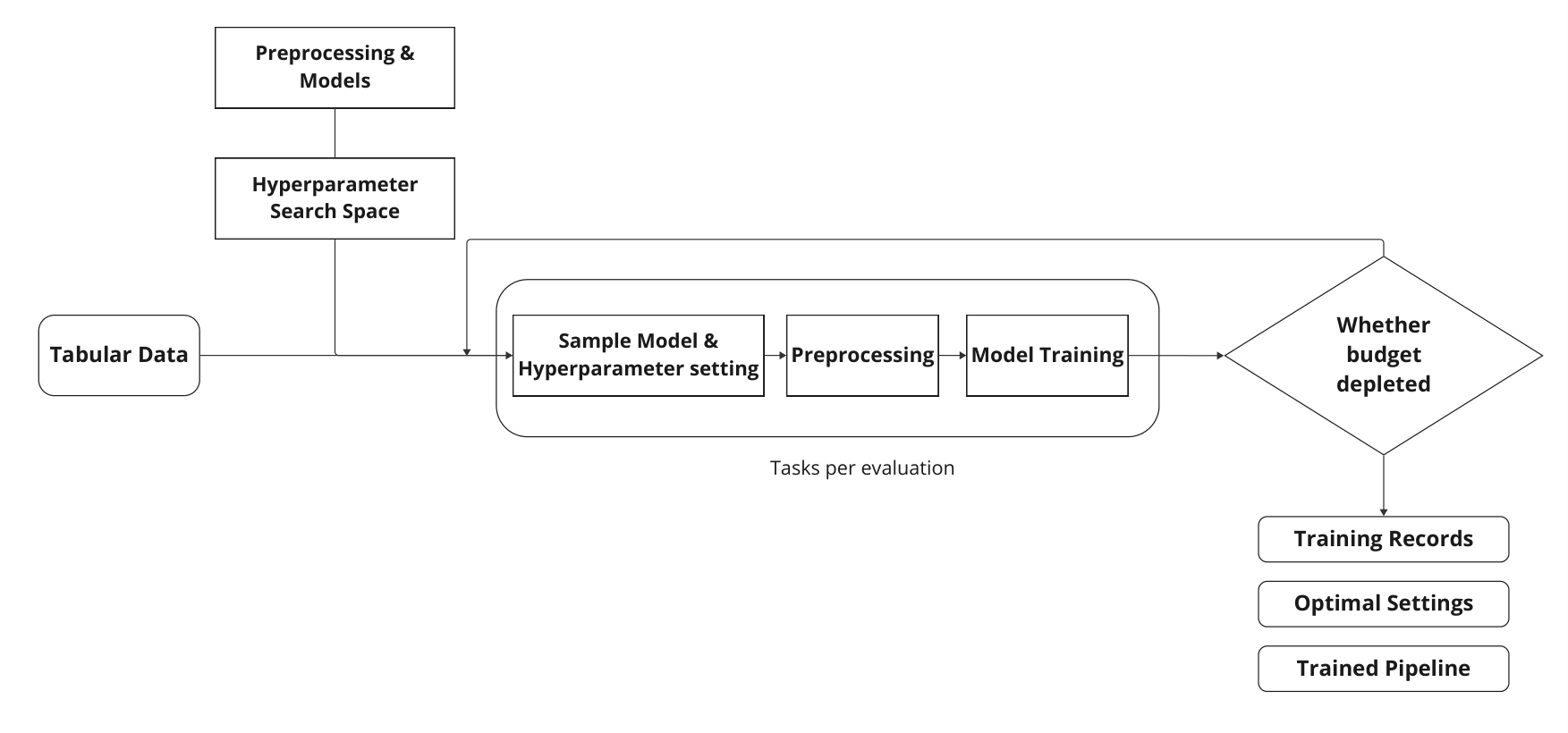 An illustration of AutoML workflow
Our Framework: An End-to-End Actuarial AutoML Pipeline
To solve these workflow bottlenecks, we designed an AutoML architecture that automatically handles the entire ML life-cycle. Our pipeline integrates data encoding, imputation, scaling, and critical data balancing techniques (i.e., over- or under-sampling) directly into the optimization process. We utilized a Combined Algorithm Selection and Hyperparameter optimization (CASH) framework, allowing the system to autonomously explore massive search spaces to find the optimal preprocessing-modeling combinations. Furthermore, to handle the rare-event nature of insurance claims, our architecture natively supports Stacking, Bagging, and Boosting ensemble strategies alongside customized, cost-sensitive actuarial loss functions.
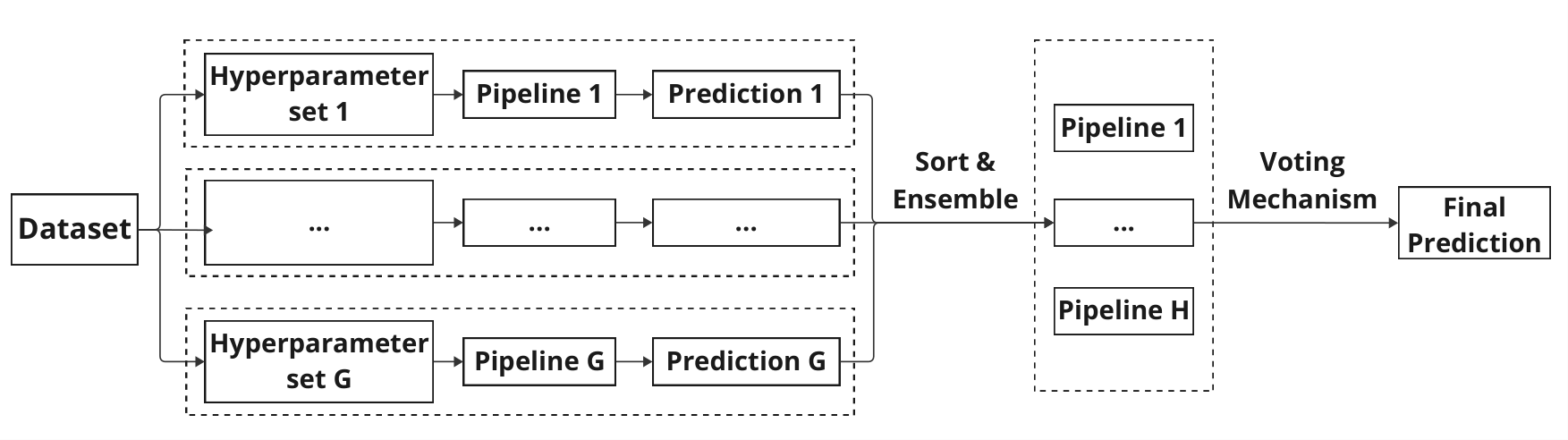 An illustration of stacking ensemble training diagram
The Impact: Outperforming Traditional Benchmarks
We tested our AutoML tool against classical actuarial datasets. The empirical results show that: our automated pipelines consistently outperformed traditional GLMs and achieved predictive accuracy that rivals or surpasses state-of-the-art, manually tuned expert models. Ultimately, this tool serves a dual purpose: it acts as an effortless entry point for inexperienced users and provides a performance benchmark for seasoned actuarial researchers building future models.
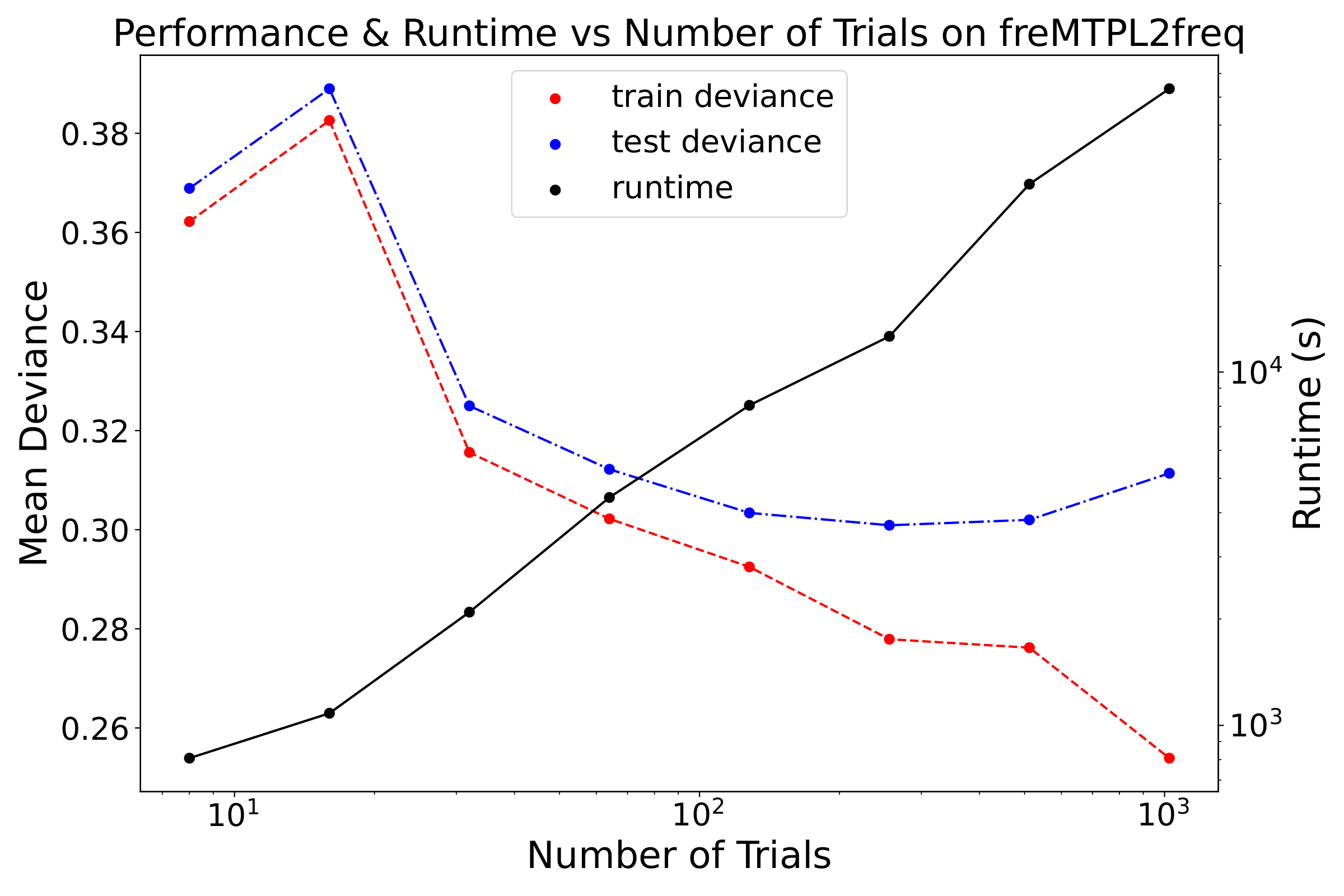 Train/Test deviance and runtime on freMTPL2freq dataset
Recommended citation: Dong, P., Quan, Z. (2025). Automated Machine Learning (AutoML) in Insurance. Insurance: Mathematics and Economics, 120, 17-41.
Read Paper | Download Bibtex